
- 1. Immediate Check: Power, Water, and Environment
- 2. Hardcore Commercial Ice Machine Troubleshooting
- 3. Proactive Commercial Ice Maker Maintenance
- 4. When to Call the Pros vs. When to DIY
If you’re dealing with a commercial ice machine not making ice, you know it’s a business emergency. As a technician who has spent a decade inside the noisy, humid backrooms of busy kitchens, I can tell you one thing: a commercial ice machine not making ice is more than just a mechanical failure—it’s a business emergency. When the ice bin is empty during a Saturday night rush, your drinks get warm, your customers get frustrated, and your profit margins start to melt away.
In this guide, I’m skipping the generic manual fluff. We’re going to dive deep into why your machine has stalled and, more importantly, how you can fix it before calling an expensive repair service.
1. The Immediate Check: Power, Water, and Environment
Before we start taking panels off, let’s rule out the “silent killers” that account for 30% of service calls.
The “Dead” Machine
If your unit is completely silent, check the circuit breaker first. Commercial ice makers draw a massive amount of power, especially during the harvest cycle. If the breaker is fine, check the bin switch. I’ve seen countless cases where a piece of ice gets stuck, tricking the machine into thinking the bin is full.
Water Supply and Pressure
You can’t make ice without water. Ensure your shut-off valve is fully open. A hidden culprit is often the water filter. If you haven’t changed your filter in over six months, the internal charcoal and sediment traps might be so clogged that the flow rate has dropped below the machine’s minimum requirement.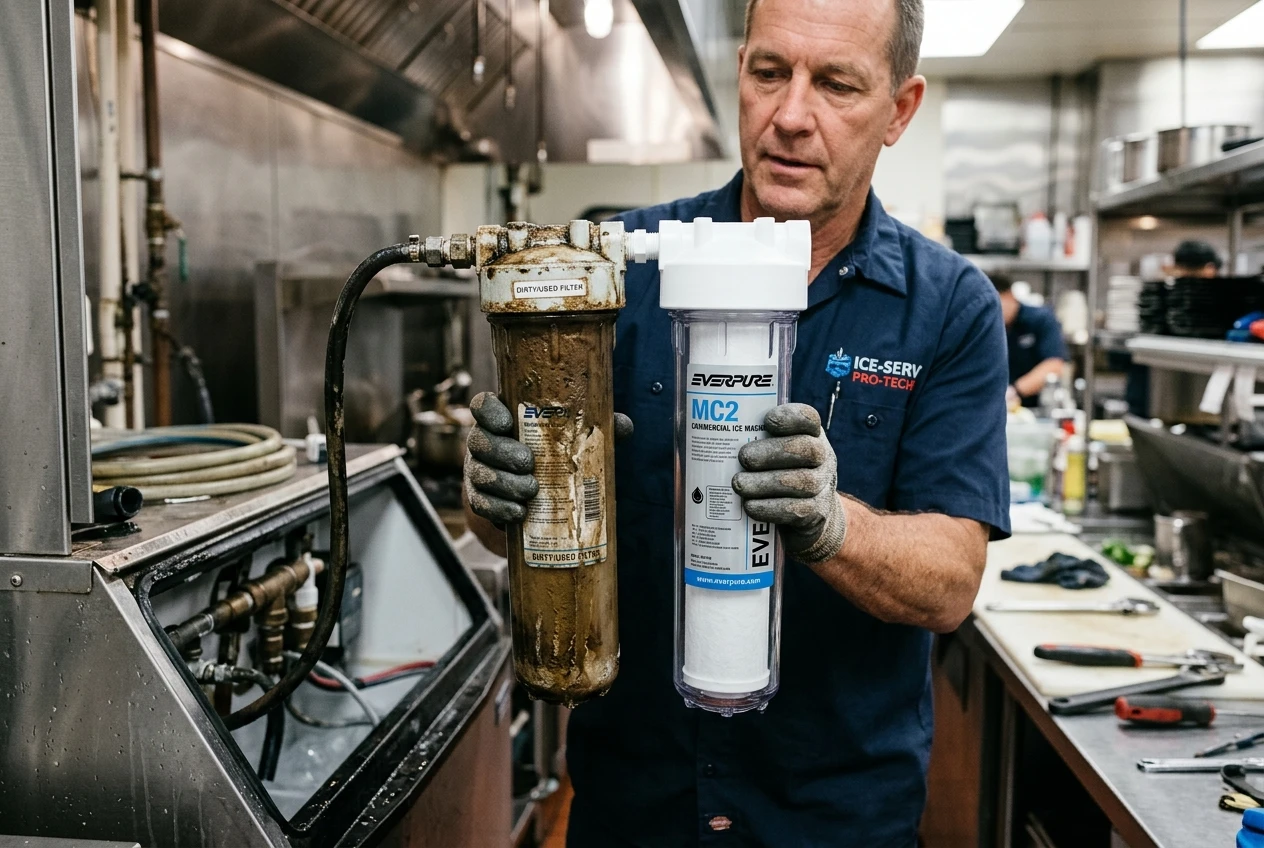
2. Hardcore Commercial Ice Machine Troubleshooting
Now, let’s get into the mechanical guts. If your machine is running but the evaporator is dry, here’s what you need to look at. For fundamental refrigeration principles, HVACR school provides excellent resources for technicians.
The Inlet Water Valve
If you hear the machine clicking but no water is entering the trough, your inlet solenoid valve is likely seized or burnt out. These valves operate under high heat and constant cycles. A quick way to test is to check the coil for continuity with a multimeter.
Scale Buildup on the Evaporator
This is the number one enemy of ice production. If your water is “hard” (high mineral content), calcium deposits will form on the evaporator plates. This scale creates an insulating layer that prevents the freezing process from starting correctly. If you see white, chalky residue, you don’t need a new machine—you need a deep chemical descaling. When dealing with a commercial ice machine not making ice, severe scale buildup on the plates is almost always the prime suspect.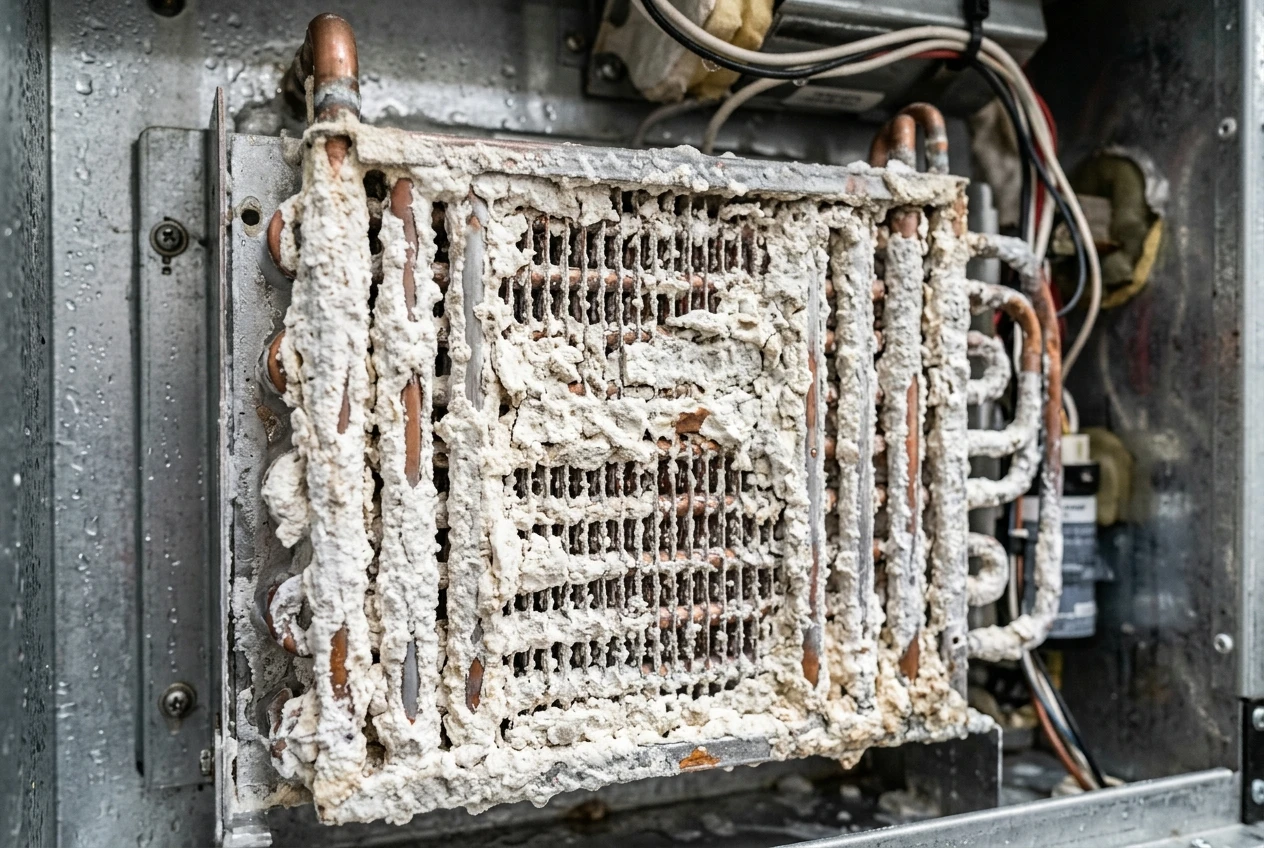
Refrigeration Issues (The Harvest Cycle)
Is your machine stuck in the freeze cycle for too long? It could be a low refrigerant charge or a faulty hot gas valve. If the ice isn’t dropping (harvesting), the machine will eventually time out and shut down to protect the compressor.
3. Proactive Commercial Ice Maker Maintenance: The HuaChill Way
At HuaChill, we build our machines to be workhorses, but even the best thoroughbred needs grooming. To avoid the stress of commercial ice machine troubleshooting, follow this strict maintenance schedule:
Monthly: Filter Check and Vent Cleaning
Dust and grease are the silent killers of compressors. If your condenser coils are caked in kitchen grease, the machine can’t reject heat. Use a soft brush or a vacuum to keep those fins clear. Dirty coils restrict heat rejection, eventually leading to your commercial ice machine not making ice.
Bi-Annually: Professional Descaling and Sanitization
Don’t just run a “clean cycle.” You need to manually scrub the distribution tubes, water sensors, and the ice thickness probe. A dirty thickness probe is why your cubes might be coming out too thin or like “slush.”
4. When to Call the Pros vs. When to DIY
If you’ve checked the water, cleaned the coils, and reset the board, but you’re still facing a commercial ice machine not making ice, it might be a compressor failure or a control board glitch. These require specialized tools and EPA-certified handling of refrigerants.
Conclusion: Reliability Starts with Proper Care
A commercial ice maker is the heart of your beverage service. By staying on top of your commercial ice maker maintenance, you extend the life of your unit by years and save thousands in emergency repairs.
Need a machine that’s built to last? Explore the HuaChill range of professional ice solutions designed for the rigors of high-volume kitchens.