
Table of Contents
- The “Danger Zone” and the Physics of Macro-Crystals
- Food Safety Compliance: Beating the Bacteria Clock
- Increasing ROI Through Advanced Prep (Cook-Chill)
- Technical Comparison: Standard Freezer vs. HuaChill Blast Freezer
- Pro Tip: Don’t Overload the Airflow
- Frequently Asked Questions
In a professional kitchen, a commercial blast freezer is the most critical tool for food safety and quality. In a professional kitchen, temperature is a measurement of safety, quality, and profit. While most chefs focus on the heat of the oven, the most successful operators focus on the speed of the chill. If you are using a standard walk-in freezer to cool down hot stocks, sauces, or proteins, you aren’t just risking food safety—you are destroying the texture of your ingredients.
At HuaChill, we’ve engineered our industrial blast freezer series to bridge the gap between “cold storage” and “high-performance preservation.” In this guide, we will explore the physics of the commercial blast freezer and why it is the most important ROI-driver in a modern food-prep facility.
1. The “Danger Zone” and the Physics of Macro-Crystals
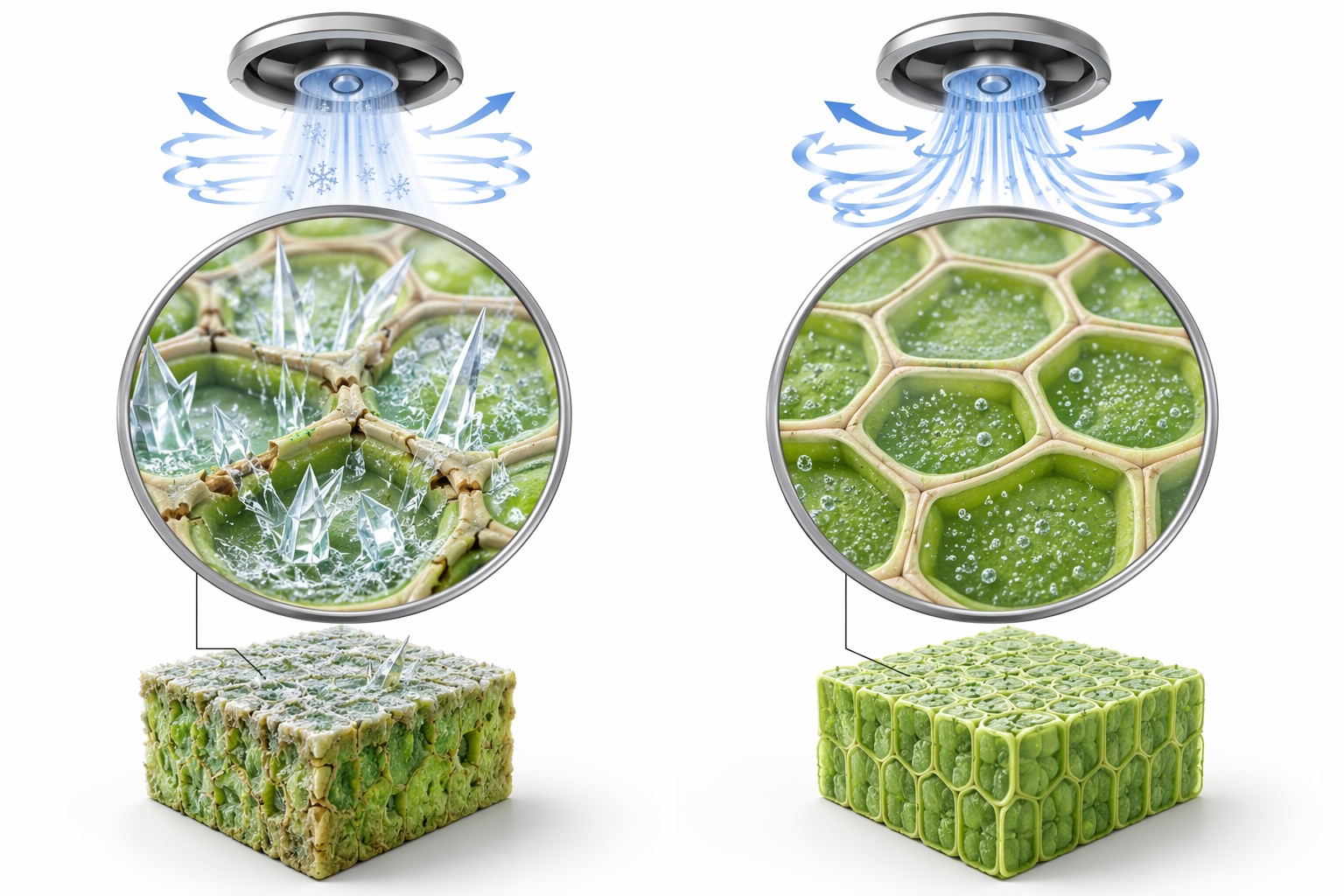
When you freeze food slowly, the water molecules have time to bond and form large ice crystals (macro-crystals). These sharp crystals puncture the cell walls of meats, vegetables, and pastries.
- The Result: When the food is thawed, the moisture leaks out (drip loss), leaving the food dry, mushy, and devoid of its original flavor.
- The Blast Freezer Solution: By circulating high-velocity air at temperatures as low as -40°C (-40°F), a shock freezer passes through the “Zone of Maximum Crystallization” in minutes. This forms micro-crystals that keep cell structures intact.
2. Food Safety Compliance: Beating the Bacteria Clock
According to international food safety standards (like the FDA Food Code), hot food must be cooled from 135°F to 41°F within a specific window to prevent bacterial bloom.
- Standard Freezer: Can take 6-12 hours to reach the core of a deep pan, providing a perfect environment for pathogens.
- HuaChill Blast Chiller: Hits the safe zone in under 90 minutes. This isn’t just about safety; it’s about meeting the strictest health inspection requirements with documented consistency.
3. Increasing ROI Through Advanced Prep (Cook-Chill)
A commercial blast freezer allows you to decouple prep time from service time.
- Batch Cooking: Prepare your signature sauces and proteins during slow periods, blast freeze them, and reheat them to “made-fresh-today” quality during the Friday night rush.
- Reduced Waste: By locking in freshness at its peak, you extend the shelf life of high-value inventory like scallops, premium wagyu, and artisanal breads, reducing your monthly spoilage costs by up to 15%.
4. Technical Comparison: Standard Freezer vs. HuaChill Blast Freezer
| Feature | Standard Reach-In / Walk-In | HuaChill Blast Freezer |
|---|---|---|
| Air Velocity | Low / Static | High-Velocity Forced Air |
| Pull-Down Speed | 6 – 10 Hours | 90 Minutes or Less |
| Texture Preservation | Poor (Cell damage) | Excellent (Micro-crystals) |
| Usage Intent | Long-term Storage | Rapid Temperature Reduction |
| Capacity | Static Volume | High-Density Tray Racks |
5. Pro Tip: Don’t Overload the Airflow
The secret to effective blast chilling is circulation.
- The Error: Packing trays too tightly blocks the high-speed air from reaching the center of the food.
- The Fix: Always leave a 2-inch gap between trays in your HuaChill unit. This ensures the “vortex” of cold air hits every surface area, guaranteeing a uniform freeze.
Conclusion: Quality You Can Taste
A commercial blast freezer is an investment in your brand’s reputation. It allows you to serve food that tastes just as vibrant and fresh as the moment it was cooked, even weeks later.
Ready to stop the drip loss?
Compare HuaChill Blast Freezer Models or Request a “Freshness ROI” Analysis from our technical team.
Frequently Asked Questions
What is the difference between a blast freezer and a standard walk-in freezer?
A standard walk-in freezer is designed for long-term cold storage of already-frozen goods. It uses static or low-velocity air and can take 6-12 hours to freeze food. A commercial blast freezer, by contrast, uses high-velocity forced air at temperatures as low as -40°C to rapidly pull heat out of food. This reduces freezing time to 90 minutes or less, forming micro-crystals that preserve cell structure and texture — something a walk-in freezer simply cannot achieve.
How does a commercial blast freezer improve food safety?
According to the FDA Food Code, hot food must be cooled through the temperature danger zone (135°F to 41°F) quickly to prevent bacterial growth. A blast freezer or blast chiller accomplishes this in under 90 minutes, whereas a standard freezer can leave food in the danger zone for 6 hours or more. This rapid cooling is critical for meeting health inspection standards and protecting your customers from foodborne illness.
Can a blast freezer help reduce food waste in my restaurant?
Absolutely. By rapidly freezing food at peak freshness, a commercial blast freezer extends the shelf life of high-value ingredients like seafood, premium meats, and baked goods. Restaurants that implement cook-chill workflows with a blast freezer typically report a 10-15% reduction in spoilage costs. Instead of discarding unused prep at the end of service, you can safely freeze it for later use without compromising quality.