
A commercial ice machine not making ice is one of the most disruptive equipment failures in any foodservice or hospitality operation. The good news: the majority of cases come down to a handful of fixable issues — dirty components, restricted water flow, or minor sensor failures.
Before calling a technician, work through the checklist below. Most operators resolve the problem within 30–60 minutes using basic tools and without replacing any parts.
7 Proven Fixes for a Commercial Ice Machine Not Making Ice
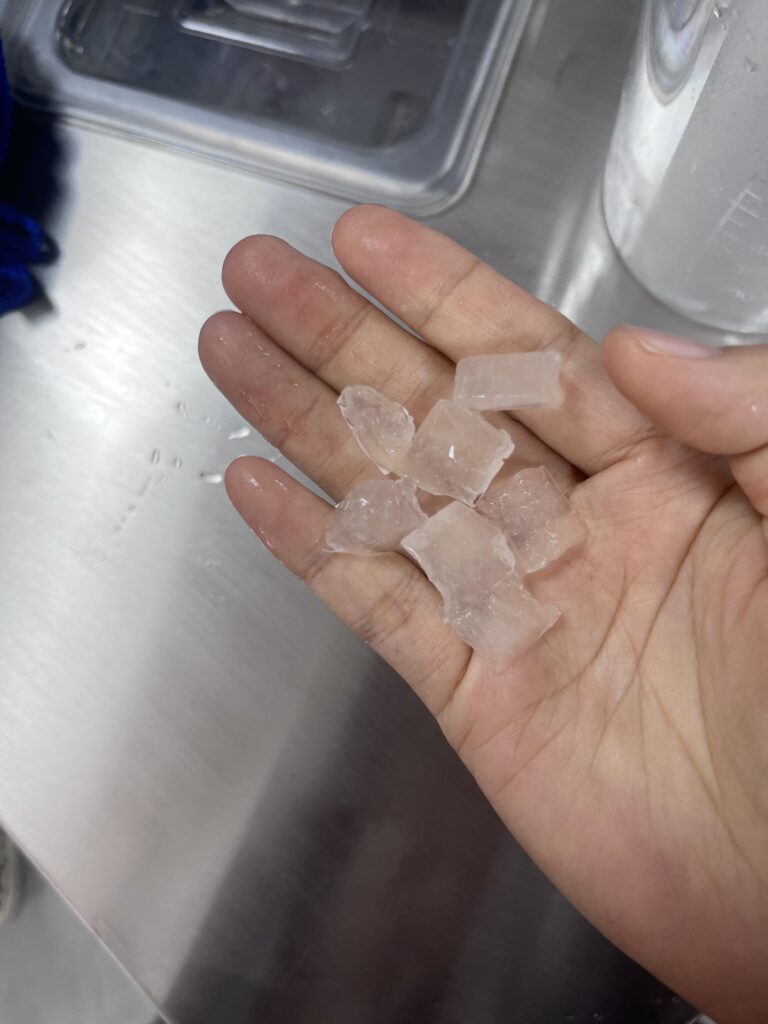
1. Check and Clean the Water Filter
A clogged water filter is the single most common reason a commercial ice machine stops producing ice. Sediment, scale, and mineral buildup gradually restrict water flow until the machine can no longer complete a freeze cycle.
How to fix it:
- Locate the inline water filter (typically behind or beneath the unit)
- Turn off the water supply valve
- Remove and inspect the filter cartridge
- Replace if it has been in service longer than 6 months, or if flow is visibly restricted
- Most manufacturers — huachill — recommend filter replacement every 6 months or per 1,500 gallons of water processed
According to NSF International commercial ice equipment standards, regular filter maintenance is mandatory for food-safe ice production and directly impacts machine output capacity.
2. Inspect the Water Supply Line
Even with a clean filter, a kinked, frozen, or partially closed supply line will starve the machine of water.
Steps to check:
- Trace the supply line from the wall valve to the machine inlet
- Confirm the shutoff valve is fully open (parallel to the pipe = open)
- Look for kinks, pinches, or visible damage along the hose
- Check that water pressure at the inlet meets the manufacturer spec — typically 20–80 PSI
- If pressure is below spec, contact your building facilities team
3. Clean the Condenser Coils
Dirty condenser coils force the refrigeration system to work harder and hotter. When the condenser cannot shed heat efficiently, the machine enters a safety shutdown — and stops making ice entirely.
Air-cooled units: Use a soft brush or compressed air to remove dust and grease from the coil fins. Clean every 30–90 days in high-dust environments.
Water-cooled units: Scale buildup inside the condenser requires a descaling flush using a food-safe ice machine cleaner. Follow the procedure in your unit’s service manual.
| Condenser Type | Cleaning Method | Frequency |
|---|---|---|
| Air-cooled | Compressed air + brush | Every 30–90 days |
| Water-cooled | Descaling solution flush | Every 3–6 months |
| Remote condenser | Professional coil cleaning | Annually |
4. Check the Room and Water Temperature
Commercial ice machines are engineered to operate within specific ambient and water temperature ranges. Exceeding those limits triggers automatic shutdowns designed to protect the compressor.
Typical operating limits:
- Ambient air temperature: 50°F – 100°F (10°C – 38°C)
- Incoming water temperature: 40°F – 90°F (4°C – 32°C)
If your kitchen runs hot in summer — especially near ovens or fryers — consider relocating the unit or improving ventilation. Even a 5°F reduction in ambient temperature can restore full ice output.
5. Inspect the Ice Thickness Sensor
The ice thickness (or harvest) sensor tells the machine when a slab or cube has reached the correct size and triggers the harvest cycle. A dirty or misaligned sensor causes the machine to either never harvest or harvest prematurely — both result in no usable ice reaching the bin.
How to check:
- Locate the sensor probe on the evaporator plate (refer to your model’s diagram)
- Clean the probe with a soft cloth and food-safe ice machine cleaner — never abrasive pads
- Verify the probe is positioned correctly according to the spec sheet
- For models like the Manitowoc Indigo Series, diagnostic codes on the display panel will indicate sensor faults directly
6. Reset or Replace the Thermostat
A faulty bin thermostat can falsely signal that the ice bin is full, halting production even when the bin is empty.
Quick diagnostic:
- Empty the ice bin completely
- Press the reset button (location varies by model — check your manual)
- Allow 15–20 minutes for a new freeze cycle to begin
- If the machine still does not start a cycle, test the thermostat with a multimeter for continuity
- Replace the thermostat if it reads open circuit when ice bin temperature is above 15°F (-9°C)
Thermostat replacement is a low-cost repair — typically $15–$60 in parts — and can be done without specialist tools on most modular ice machines.
7. Check the Evaporator Plate and Spray Nozzles
Scale deposits on the evaporator plate and blocked spray nozzles are a leading cause of reduced or zero ice production in high-hardness water areas.
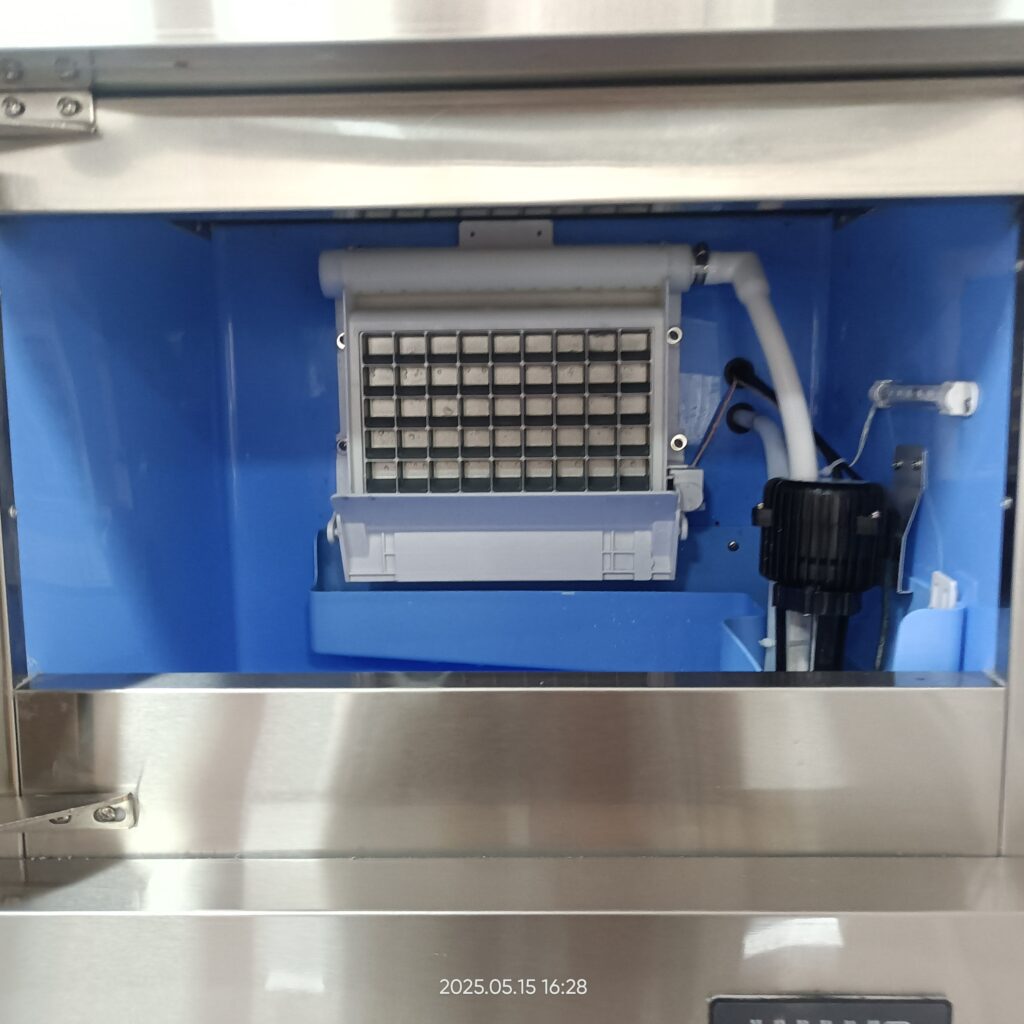
Descaling procedure:
- Put the machine into clean mode (refer to manual)
- Add the manufacturer-recommended descaling solution — typically nickel-safe ice machine cleaner
- Run a full clean cycle (usually 45–60 minutes)
- Follow with a sanitize cycle using the recommended sanitizer
- Inspect spray nozzles and clear any remaining blockages with a fine wire or toothpick
If scale is severe and covers more than 30% of the evaporator surface, a second clean cycle may be needed before ice production resumes.
Preventive Maintenance Schedule to Avoid Ice Production Issues
The most cost-effective strategy is consistent preventive maintenance. Based on industry best practices, here is a recommended schedule:
Monthly
- Wipe down exterior and air vents
- Check ice bin for odors or discoloration
- Verify water pressure at inlet
Every 3 Months
- Clean condenser coils (air-cooled units)
- Inspect and clean spray nozzles
- Check water filter condition
Every 6 Months
- Replace water filter cartridge
- Run a full descale and sanitize cycle
- Inspect door gaskets and bin lid seal
- Check harvest sensor calibration
Annually
- Professional refrigeration inspection
- Refrigerant level check
- Full component diagnostic
💡 Pro Tip: Keep a maintenance log taped inside the access panel. Recording dates and findings helps technicians diagnose recurring issues faster and supports warranty claims.
When to Call a Professional Technician
Some faults require a licensed refrigeration technician. Stop DIY troubleshooting and call a professional if you observe any of the following:
- Error codes related to the compressor, refrigerant circuit, or control board
- Compressor not starting after a successful reset
- Refrigerant leaks — identifiable by oily residue near refrigerant lines or unusually warm condenser output
- Control board failures — typically indicated by unresponsive displays or random cycling
- Unusual grinding or clicking sounds from the compressor or fan motor
Attempting refrigerant work without EPA Section 608 certification is illegal in the United States. Always use a certified technician for refrigeration system repairs.
FAQ: Commercial Ice Machine Not Making Ice
How long does it take for a commercial ice machine to start making ice after a reset?
Most units require 15–30 minutes to complete the first freeze cycle after a reset, depending on ambient temperature and machine size.
Why does my ice machine run but produce no ice?
The most common causes are a failed harvest sensor, a dirty evaporator plate, or a blocked water inlet. Start with the water supply and filter, then move to the evaporator and sensors.
How often should a commercial ice machine be cleaned?
The FDA Food Code and NSF/ANSI 12 standard recommend cleaning and sanitizing commercial ice machines at least every 6 months. High-use or hard-water environments may require quarterly cleaning.
Can low refrigerant cause a commercial ice machine to stop making ice?
Yes. Low refrigerant causes incomplete freeze cycles and is usually accompanied by longer-than-normal freeze times before output stops entirely. This requires a licensed technician to diagnose and recharge.
What is the lifespan of a commercial ice machine?
With proper maintenance, most commercial ice machines last 7–10 years. Units in hard-water areas or high-use environments may require major servicing earlier without a consistent descaling routine.