
A seafood display ice bed is the foundation of freshness in any market. In a high-end supermarket or seafood market, your ice bed is not just a cooling medium—it is a stage. A well-constructed ice bed can extend the shelf life of your inventory by 20% and increase impulse purchases by making products look vibrant and fresh. However, if your ice is clumping or melting too fast, you are literally watching your profits drain into the floor.
At HuaChill, our industrial flake ice makers are designed to produce “Sub-Cooled Dry Flakes” that stay light and moldable for the entire shift. In this guide, we will share the professional protocol for building a seafood display ice bed that sells.
Table of Contents
- 1. The Foundation: The Two-Layer System
- 2. Physics of the “Perfect Tilt”
- 3. The HuaChill Advantage: Dry Flake vs. Wet Slush
- 4. Maintenance & Sanitation Protocols
- Conclusion: Quality You Can See
1. The Foundation: Seafood Display Ice Bed Two-Layer System
Many amateur displays just dump ice on a tray. Pros build a foundation.
- The Base Layer: Start with a 3-inch layer of standard flake ice. Pack it down firmly. This acts as an insulator, keeping the cold locked in from the bottom.
- The Display Layer: On top, use fresh, loose “Dry Flakes” from your HuaChill unit. This layer should be soft enough to cradle the fish without crushing the skin.
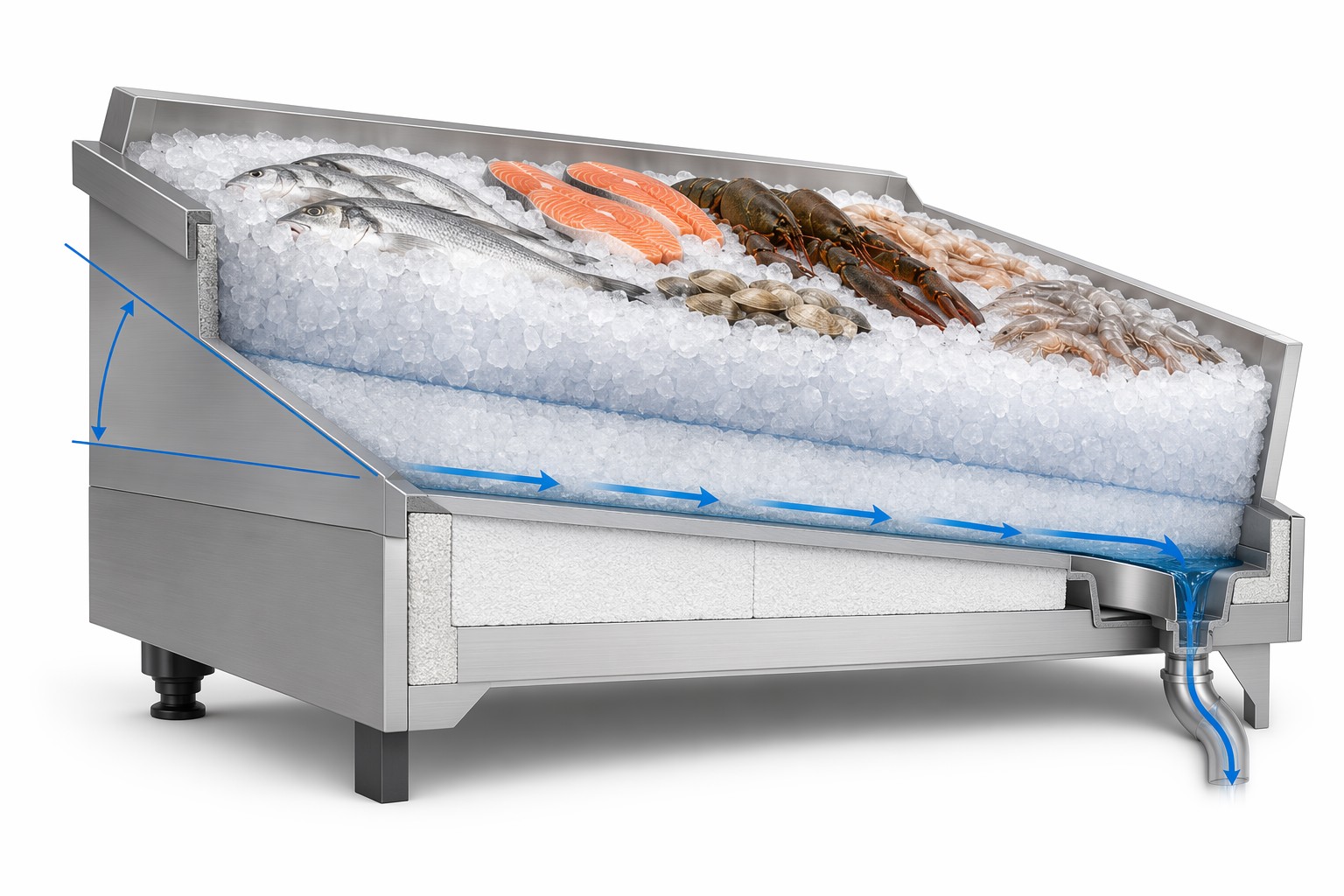
2. Physics of the “Perfect Tilt”
To maximize visual impact, your ice bed should be sloped toward the customer at a 15 to 20-degree angle. Ultimately, a well-designed seafood display ice bed powered by HuaChill flake ice is the surest way to protect your inventory and impress every customer who walks by.
- Why?: This angle ensures that any surface melt-water drains away from the fish immediately into the base layer, preventing the “soaking” that causes bacterial growth.
- Product Placement: Always bury the larger, denser fish (like Tuna or Salmon) deeper into the ice, while keeping smaller items like shrimp on the surface.
3. The HuaChill Advantage: Dry Flake vs. Wet Slush
The biggest enemy of a beautiful supermarket fresh fish display is “Slush-out.”
- Sub-Cooling Tech: HuaChill machines produce ice at -2°C (28°F). This extra cooling ensures that the flakes don’t stick together in the bin.
- Visual Brilliance: Our ice is crystal white and highly refractive, making it pop under the bright LED lights of a modern grocery store.
4. Maintenance & Sanitation Protocols
An ice bed can become a breeding ground for odors if not managed correctly.
- Complete Turn-over: Never just “top off” the old ice. Every 24 hours, the bed must be completely drained and sanitized.
- Scuttle the Drain: Ensure the drainage holes are not blocked by fish scales or loose ice chunks.
- Temperature Logs: Use a digital probe to ensure the surface temperature of the fish remains between 32°F and 36°F (0°C to 2°C).
Conclusion: Quality You Can See
A professional ice bed is a reflection of your brand’s commitment to quality. By combining the right technique with a high-performance commercial flake ice machine, you turn your fresh seafood section into a premium destination.
Ready to upgrade your display?
Compare HuaChill Industrial Flakers or Read our 2026 Freshness Guide today.