
Table of Contents
- 1. TDS and the “Ghost in the Machine”
- 2. Chlorine: The Silent Corroder
- 3. Which Filter Do You Actually Need?
- 4. The Maintenance Math: Filters vs. Repairs
- 5. Pro Tip: The “Pre-Filter” Secret
- Conclusion: Protect Your Pour
A commercial ice machine water filter is not just an accessory—it’s the difference between a profitable kitchen and a maintenance nightmare. You spent $3,000 on a high-end commercial ice machine, connected the water line, and started serving drinks. Everything is perfect—until six months later, the harvest cycle takes twice as long, and the ice cubes look “cloudy.” You call a technician, and they tell you the evaporator plate is permanently etched by scale. The bill? $1,500.
At HuaChill, we know that an ice machine is only as good as the water that feeds it. If you aren’t using a professional-grade filtration system, you aren’t just making ice; you’re building a limestone cave inside your equipment. In this guide, we’ll strip away the marketing fluff and tell you exactly what water quality is doing to your machine and how to stop it.
1. TDS and the “Ghost in the Machine”
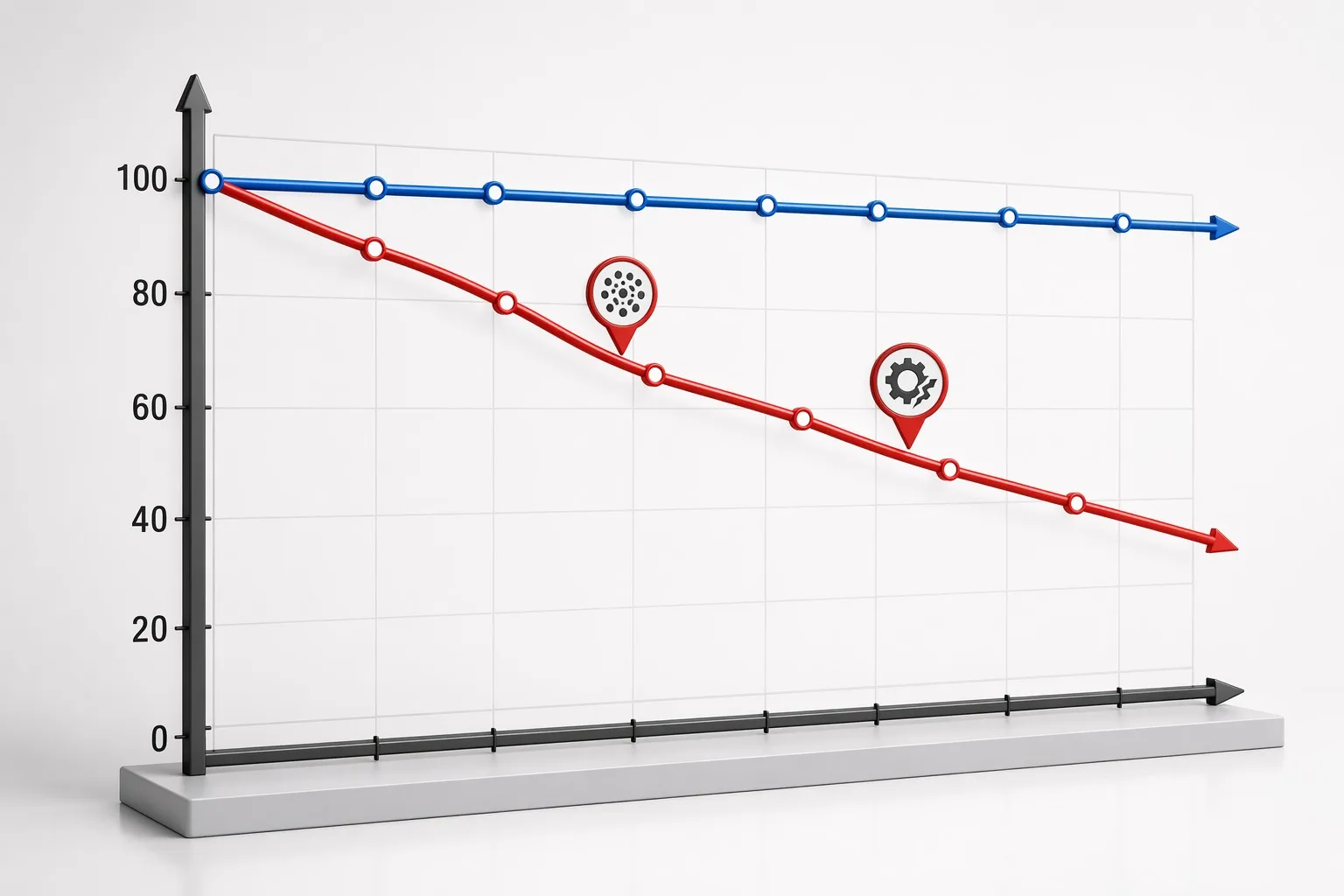
TDS (Total Dissolved Solids) is a measure of the minerals like calcium and magnesium in your water. When water freezes on the evaporator, it leaves these minerals behind.
- The Insulator Effect: Scale buildup acts like a thermal blanket. It prevents the cold evaporator from efficiently cooling the water, forcing your compressor to run 30% longer to make the same batch of ice.
- The Physical Damage: Hard scale is abrasive. It clogs spray bars, jams water pumps, and causes the solenoid valves to leak. Once scale etches the nickel plating on your evaporator, the ice will stick, and the machine will enter a “Freeze-Up” error state.
2. Chlorine: The Silent Corroder
Most city water is treated with chlorine to kill bacteria. While safe for humans, chlorine is a disaster for stainless steel and copper.
- Pitting Corrosion: Over time, high chlorine levels create microscopic pits in the metal components of your HuaChill machine, eventually leading to refrigerant leaks that are impossible to repair.
- Taste Profile: If your ice smells like a swimming pool, your $5-a-cup craft soda will taste like one too.
3. Which Filter Do You Actually Need?
Don’t just buy the cheapest filter on the shelf. You need to match the technology to your water problem:
| Filter Type | What it Fixes | Best For… |
|---|---|---|
| Carbon Block | Chlorine, Odor, Bad Tastes | City water with low mineral content. |
| Polyphosphate | Scale Inhibition | Hard water areas (prevents minerals from sticking). |
| Sub-Micron | Cysts, Bacteria, Fine Sediment | High-hygiene environments like hospitals. |
| Reverse Osmosis | Everything (Removes 99% of TDS) | Extreme hard water areas; produces “Diamond” clear ice. |
4. The Maintenance Math: Filters vs. Repairs
A high-quality HuaChill-compatible filter cartridge costs between $80 and $150. You should change it every 6 months.
- Cost of Filters (5 Years): ~$1,000.
- Cost of NO Filters (5 Years): $500 (Acid Descaling) + $1,500 (New Evaporator) + $600 (Lost Sales during downtime) = $2,600.
The choice is obvious: Prevention is the highest ROI strategy in the kitchen.
5. Pro Tip: The “Pre-Filter” Secret
If your business is in an area with high sediment (sand/silt), your expensive carbon filter will clog in 30 days. Always install a cheap, 5-micron sediment pre-filter before your main system. It costs $10 and protects your $100 filter, doubling its lifespan.
Conclusion: Protect Your Pour
Your ice machine is the hardest-working employee in your kitchen. Don’t let it choke on bad water. By installing the right filtration system today, you guarantee the longevity of your HuaChill equipment and the purity of your brand.
Does your water pass the test?
Explore HuaChill Filtration Kits or request a Free Water Analysis Kit from our technical team.
—
Looking for technical manuals, installation advice, or expert troubleshooting for this model? Explore our comprehensive Technical Support guide.